Shaping E-Roads Efficiency for Freight Automation (SEE-FAr)
Project Overview
The Shaping E-Roads Efficiency for Freight Automation (SEE-FAr) project investigates innovative solutions for the electrification and automation of long-haul freight transport. It combines data-driven analytical models with agent-based simulation to assess the technical, economic, and environmental impacts of deploying stationary (plug-in) and dynamic (in-motion electric road) charging infrastructures.
SEE-FAr aims to provide actionable insights into the cost-effectiveness, scalability, and sustainability of different charging strategies, helping stakeholders shape the future of freight logistics in an era of automation and electrification.
Objectives
- Analyze the operational efficiency of e-road freight systems under automation.
- Evaluate trade-offs between stationary charging and dynamic charging infrastructures.
- Quantify energy consumption, emissions reduction, and system costs.
- Identify policy and planning strategies to support a sustainable freight transition.
Collaboration
SEE-FAr is funded by the German Research Foundation (DFG) and the Austrian Science Fund (FWF), and is jointly undertaken by an international team of experts in transportation engineering, logistics, and energy systems. At TUM, the project is hosted at the Chair of Transportation Systems Engineering, led by Prof. Dr. Constantinos Antoniou, together with partners at BOKU University, Vienna, led by Prof. Dr. Yusak Susilo.
Workshops
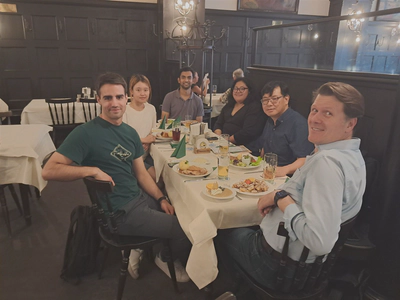
The first SEE-FAr workshop, Recent Advances in Electric and Automated Road Freight Transport, was held at TUM on 16 July 2026, bringing the project team together with invited international experts on freight electrification, charging infrastructure, adoption behaviour, and delivery policy.
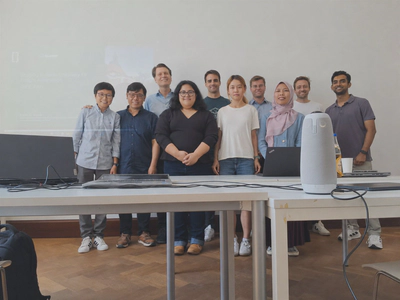
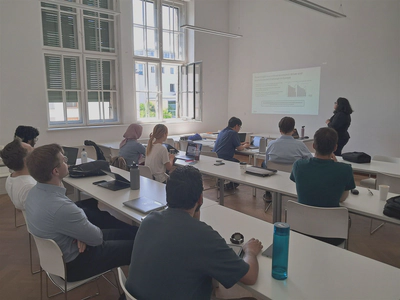
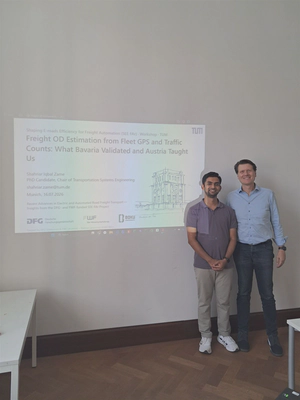
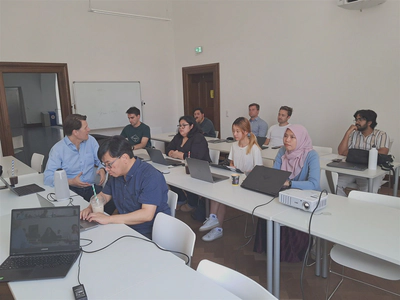
Read the full recap: Hosting and Presenting at the First SEE-FAr Workshop at TUM
Role
As a doctoral researcher and research associate, Shahriar Iqbal Zame contributes to the development of agent-based models, optimization frameworks, and scenario analysis. The focus lies on understanding behavioral responses, infrastructure utilization, and system-level implications of electrification and automation in freight transport.
More Information
For official project details: SEE-FAr Project Website (TUM)

Shahriar Iqbal Zame
Doctoral Candidate & Research Associate
Research interests include agent-based simulations, optimization, mode choice modeling, freight electrification and automation.